

National Decent Work Program Signed for 2026–2030
Rumipos.com, Jakarta, Kamis, 29/10/2026 — Indonesia has launched a National Decent Work Program for 2026–2030 with employers, labor unions and the ILO to expand productive jobs and improve worker protection.
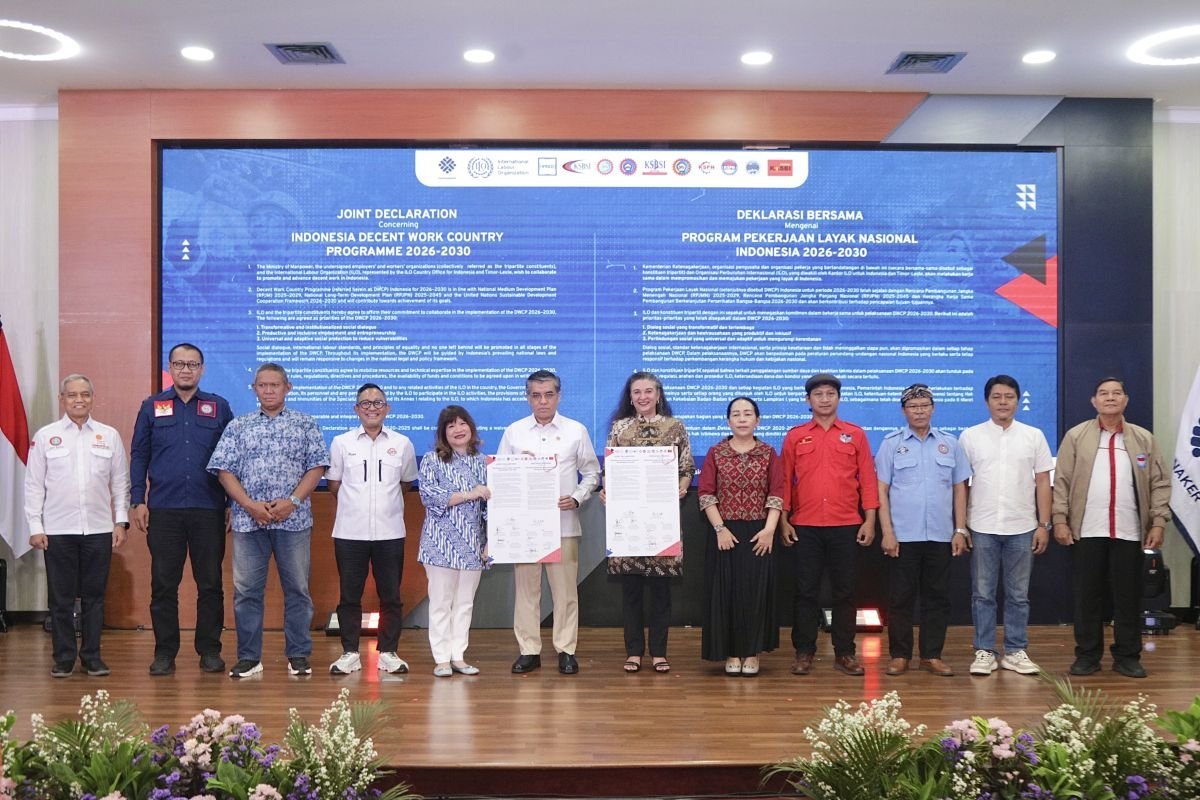
The agreement was sealed with the signing of the Indonesia Decent Work Country Programme declaration by the Ministry of Manpower, Apindo, confederations of workers and the ILO.
“The program is a joint national commitment and not merely an ILO agenda,” said Yassierli, Minister of Manpower, Kamis, 29/10/2026.
Indonesia’s workforce totals about 155 million, with roughly 60 percent still in the informal sector.
Three Core Agendas
The first agenda is to strengthen transformative and institutionalized social dialogue.
The second agenda aims to create productive and inclusive employment and entrepreneurship opportunities.
The third agenda focuses on expanding universal social protection that can adapt to changes in the world of work.
Yassierli said policies must go beyond job quantity to ensure work is formal, productive, protected and fairly paid.
He noted that the pace of change in work is accelerating because of digitalization, artificial intelligence, the green transition, demographic shifts and global economic developments.
Collaboration and Implementation
The Ministry of Manpower will work with related ministries, local governments, Apindo, labor unions and the ILO to run the program.
Yassierli stressed that the declaration marks the start of a five‑year agenda and must deliver tangible benefits for workers and businesses.
“Digitalization, artificial intelligence, and the green transition open opportunities for higher productivity and new job creation,” said Simrin Singh, ILO Director for Indonesia and Timor‑Leste, Kamis, 29/10/2026.
Success will be measured by the ability of economic opportunities to generate better and more inclusive jobs, Simrin added.
Implementation will require aligning training, industry needs, labor relations and social protection coverage so that benefits reach a wider population.
The program sets a five‑year framework for national employment policy, aiming to address persistent challenges such as informal work, skill gaps, unequal access and protection shortfalls.